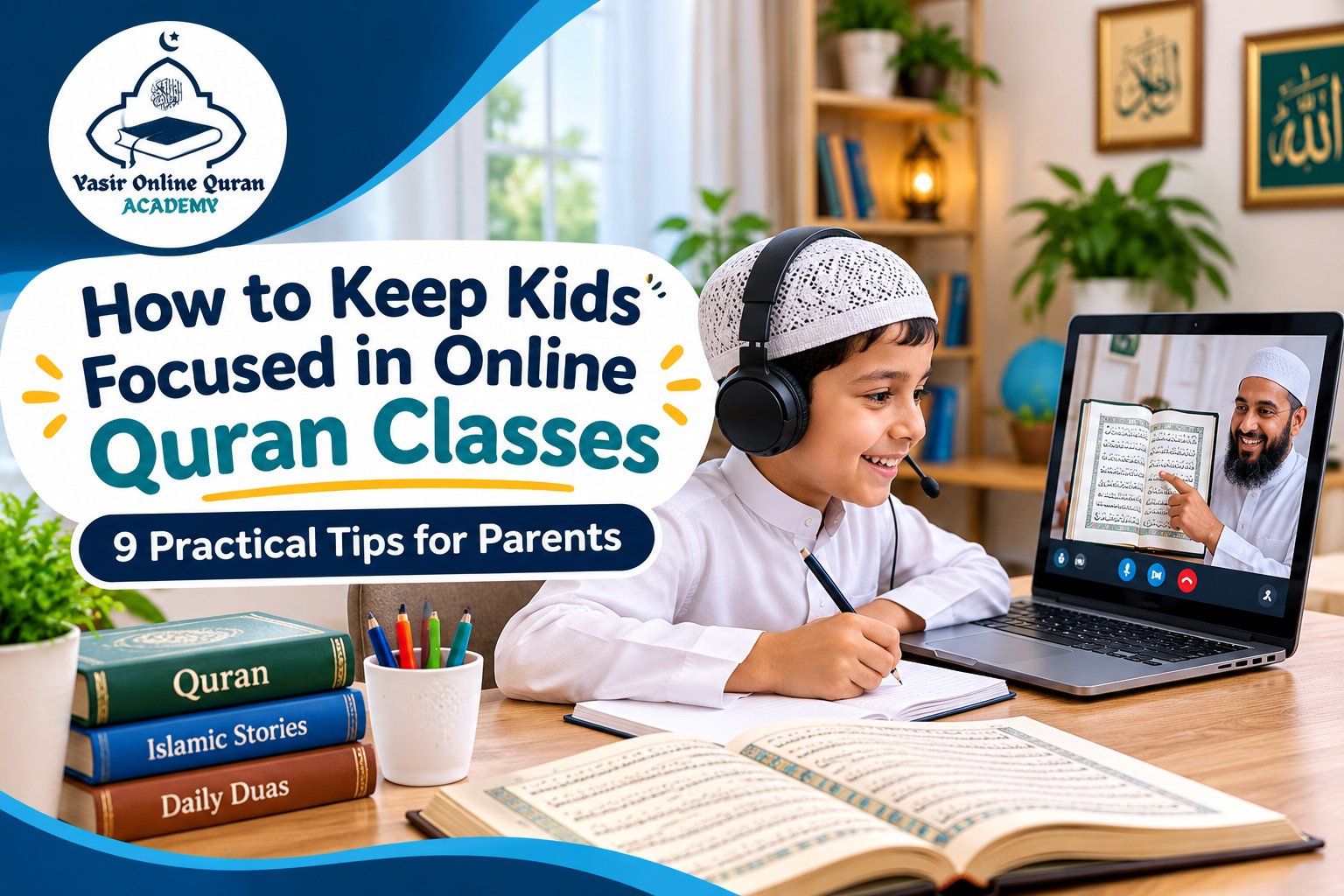
- Online Quran Classes for Kids: 9 Tips to Stay Focused
Online Quran classes for kids can be a wonderful way for children to learn the Quran from home. However, some children may find it difficult to stay focused during online lessons. They may become distracted by toys, background noise, electronic devices, or the activities happening around them. With a consistent routine, a comfortable learning space, and positive encouragement, parents can help children enjoy their Quran lessons and develop good learning habits.
Every child learns differently. Some children can concentrate for longer periods, while younger learners may need short activities, gentle reminders, and regular encouragement. The goal is not to force children to sit perfectly still. Instead, it is to make Quran learning meaningful, comfortable, and suitable for their age.
In this guide, you will discover nine practical ways to help your child stay attentive, participate actively, and build a positive relationship with Quran learning.
Why Do Children Lose Focus During Online Quran Classes?
Before looking at the solutions, it helps to understand why children sometimes struggle to concentrate during online lessons.
- Too many distractions: Toys, television, mobile phones, and conversations can interrupt learning.
- Uncomfortable surroundings: Poor seating, background noise, or a cluttered desk can make concentration difficult.
- Long periods of sitting: Young children often need movement and variety to remain engaged.
- Difficulty with the lesson: A child may lose interest when the material feels too easy, too difficult, or confusing.
- Tiredness or hunger: Children generally learn better when they are rested and comfortable.
- Lack of interaction: Children may become passive if they only listen without reading, answering questions, or participating.
Recognizing the cause of distraction helps parents and teachers choose the right solution rather than repeatedly telling a child to pay attention.
1. Create a Quiet and Comfortable Learning Space
One of the simplest ways to improve concentration during online Quran classes for kids is to prepare a dedicated learning space. It does not need to be a separate room or an expensive study area. A quiet corner of the home can work very well.
Before the lesson begins, remove unnecessary toys, turn off the television, and keep unrelated devices away. Make sure your child has a comfortable chair, suitable lighting, and enough space for the Quran or learning materials.
Keep the essential items within reach so that your child does not need to leave the lesson repeatedly. A calm, organized environment helps children understand that it is time to learn.
2. Follow a Consistent Class Routine
Children often feel more comfortable when they know what to expect. A regular Quran class schedule can help them prepare mentally and reduce last-minute distractions.
Try to schedule lessons at a time when your child is generally alert and comfortable. Avoid arranging a class immediately after an exhausting activity or when your child is very hungry or sleepy.
A simple pre-class routine might include preparing the Quran, arranging the desk, checking the internet connection, and joining the online classroom a few minutes early.
Consistency matters more than perfection. If a child occasionally has a difficult day, respond calmly and return to the routine at the next lesson.
3. Choose Age-Appropriate Learning Goals
Children do not all learn at the same speed. Their age, previous learning experience, confidence, and individual needs can affect how long they concentrate and how quickly they progress.
For a younger child, a lesson may need frequent changes of activity and simple instructions. An older child may be ready for longer reading practice, revision, and more independent work.
Instead of expecting every child to complete the same amount of work, set realistic goals for each lesson. For example, your child might practise a few Arabic letters, revise a previous lesson, or work on a particular Tajweed rule.
Small, achievable goals can help children feel successful. As their confidence develops, gradually introduce new challenges without making learning stressful.
4. Make Quran Learning Interactive
Children are more likely to participate when they have opportunities to respond and practise. An interactive Quran lesson allows the student to do more than listen to the teacher.
Depending on the child’s age and learning level, activities might include:
- Reading Arabic letters or Quranic words aloud.
- Repeating a verse after the teacher.
- Identifying a letter or sound in a word.
- Practising a Tajweed rule with a simple example.
- Answering a short question about the lesson.
- Revising previously learned material.
For younger learners, short activities and encouraging questions can make lessons more engaging. For children who are learning to read the Quran, the teacher can give them time to practise independently and then provide helpful feedback.
The aim is to keep the child actively involved while maintaining respect for the Quran and the learning process.
5. Use Positive Encouragement Instead of Pressure
Encouragement can help children develop confidence and a positive attitude toward learning. When a child makes an effort, recognize that effort rather than focusing only on mistakes.
You might say, “You worked hard on those Arabic letters,” or “You remembered the rule we practised last time. Well done!” Specific praise helps children understand what they did well.
A simple reward system may also be useful. Parents and teachers can use stars, stickers, progress charts, or small non-material rewards to celebrate effort and consistency.
Rewards should support learning rather than become the only reason a child attends class. Avoid comparing siblings or classmates, and do not shame a child for making mistakes. Gentle correction and patience are especially important when children are learning Quran recitation.
6. Keep the Learning Space Free from Digital Distractions
Online learning requires a screen, but unrelated digital activities can easily distract a child. Notifications, games, videos, and other open applications can interrupt concentration.
Before class, close unnecessary applications and silence non-essential notifications. If possible, use the device only for the Quran lesson during class time.
Parents can also check that the camera, microphone, internet connection, and learning materials are ready before the lesson begins. This reduces interruptions caused by technical problems.
Online safety and family preferences should always be respected. Discuss camera use, privacy, and classroom arrangements with the teacher before lessons begin. Children should be able to learn in an environment that respects their family’s safety and privacy requirements.
7. Work With the Quran Teacher
Parents and teachers can work together to support a child’s progress. If your child frequently loses focus, becomes frustrated, or struggles with a particular lesson, share your observations with the teacher.
A teacher may be able to adjust the pace, revisit a difficult topic, include more practice, or explain instructions in a simpler way.
It is also useful to ask for occasional feedback about your child’s reading, pronunciation, revision, and participation. This helps parents understand what their child is learning and how they can support practice at home.
If you are looking for a structured learning option, you can explore the Kids Quran and Islamic Learning course at Yasir Online Quran Academy.
8. Include Short Breaks When Appropriate
Some children find it difficult to concentrate continuously, especially when they are very young. A brief stretch, a drink of water, or a short movement activity between learning tasks may help them return to the lesson feeling more comfortable.
Breaks should be appropriate to the child’s age and the class schedule. For a short lesson, the teacher may simply vary the activity rather than stop the class for a separate break.
Parents should avoid interrupting the lesson unnecessarily. If a child regularly struggles to remain comfortable for the full session, discuss suitable adjustments with the teacher.
9. Celebrate Progress and Build a Revision Habit
Learning to read the Quran with accuracy and confidence takes time and regular practice. Children may forget material they learned earlier, and that is a normal part of learning. Gentle revision helps reinforce what they have already studied.
After class, ask your child to show you one thing they practised. You might listen to a short passage, review a few Arabic letters, or ask them to explain a Tajweed rule in simple words.
Keep home practice short and positive. Praise careful effort, correct mistakes gently, and avoid turning revision into a stressful test.
You can also keep a simple progress chart to record completed lessons, revision goals, or new skills. Celebrate meaningful progress without expecting perfection. Over time, regular practice can help children become more confident and independent learners.
How Yasir Online Quran Academy Supports Children’s Learning
Choosing an online Quran learning programme involves more than finding a convenient class time. Parents should consider the child’s learning level, teaching approach, communication, schedule, and comfort with online lessons.
At Yasir Online Quran Academy, families can explore Quran learning options designed for children and other learners. Depending on the selected course, learning may include Quran reading, Noorani Qaida, and Tajweed practice.
Parents can learn more about the available options here:
- Explore Quran courses to review available learning options.
- Learn about Quran Reading with Tajweed.
- See how our online classes work.
- Visit the admission page to enquire about enrolment.
Before choosing a schedule, discuss your child’s age, current reading level, learning goals, and any family preferences with the academy. A suitable learning arrangement should support the child’s progress while respecting the family’s needs.
Frequently Asked Questions
1. How can I help my child focus during online Quran classes?
Prepare a quiet learning space, follow a consistent schedule, remove unnecessary distractions, and encourage your child positively. Communicate with the teacher if concentration remains difficult.
2. How long should a child’s online Quran lesson be?
The suitable lesson length depends on the child’s age, attention, learning level, and individual needs. Parents should discuss an appropriate schedule with the teacher rather than assuming that one duration suits every child.
3. What should I prepare before an online Quran lesson?
Prepare the Quran or learning materials, a comfortable chair, good lighting, a stable internet connection, and a quiet space. Check the device before class and remove unrelated digital distractions.
4. Should I sit with my child during the lesson?
Younger children may benefit from help getting ready and occasional parental support. As children become more confident, parents can gradually encourage greater independence. Follow the teacher’s guidance and respect your family’s privacy preferences.
5. What if my child makes mistakes while reading the Quran?
Mistakes are part of learning. Encourage your child to listen carefully, repeat the correct pronunciation, and practise patiently. A qualified teacher can help identify and correct reading and Tajweed errors.
6. How can parents track Quran learning progress?
Review the teacher’s feedback, note completed lessons, and set simple revision goals. Focus on accuracy, consistency, confidence, and gradual improvement rather than comparing your child with others.
Final Thoughts
Helping children concentrate during online Quran classes for kids requires patience, preparation, encouragement, and cooperation between parents and teachers. A quiet study area, a predictable routine, interactive activities, and realistic goals can make learning more comfortable and productive.
Every child is different, so observe what helps your child learn best and adjust the routine when necessary. Celebrate small achievements, make time for gentle revision, and remember that building a lasting connection with the Quran is more important than rushing through lessons.
With consistent support and a positive learning environment, children can gradually develop better learning habits and grow in confidence as they learn to read the Quran.
Quick Guide: Helping Children Stay Focused
| Strategy | What Parents Can Do | Purpose |
|---|---|---|
| Quiet learning space | Reduce noise and remove unrelated toys. | Limit distractions. |
| Consistent routine | Prepare materials and start on time. | Build predictable habits. |
| Realistic goals | Set small tasks suitable for the child. | Support confidence. |
| Interactive practice | Encourage reading, repetition, and questions. | Increase participation. |
| Positive feedback | Praise effort and correct mistakes gently. | Encourage persistence. |
| Digital preparation | Close unnecessary applications and notifications. | Reduce interruptions. |
| Teacher communication | Discuss challenges and progress. | Coordinate support. |
| Appropriate breaks | Allow brief movement when suitable. | Improve comfort. |
| Regular revision | Review previous learning in short sessions. | Reinforce learning. |
Parent Checklist Before Every Online Quran Class
| Checklist Item | Ready? |
|---|---|
| The child is rested and comfortable. | Yes / Not yet |
| The Quran and learning materials are ready. | Yes / Not yet |
| The learning area is quiet and organized. | Yes / Not yet |
| The internet connection and device have been checked. | Yes / Not yet |
| Unnecessary apps and notifications are turned off. | Yes / Not yet |
| The child knows the goal for today’s lesson. | Yes / Not yet |
| Family privacy preferences have been communicated to the teacher. | Yes / Not yet |
| Time is available for gentle revision after class. | Yes / Not yet |